Where Driving Risk Is Most Common and Who’s Behind the Wheel

In partnership with Life360
Most drivers have experienced it—that moment when traffic feels unpredictable, with sudden stops, aggressive acceleration or cars moving well above the speed limit. While these behaviors can happen anywhere, they tend to cluster in certain parts of the country, creating more consistently risky conditions on the road.
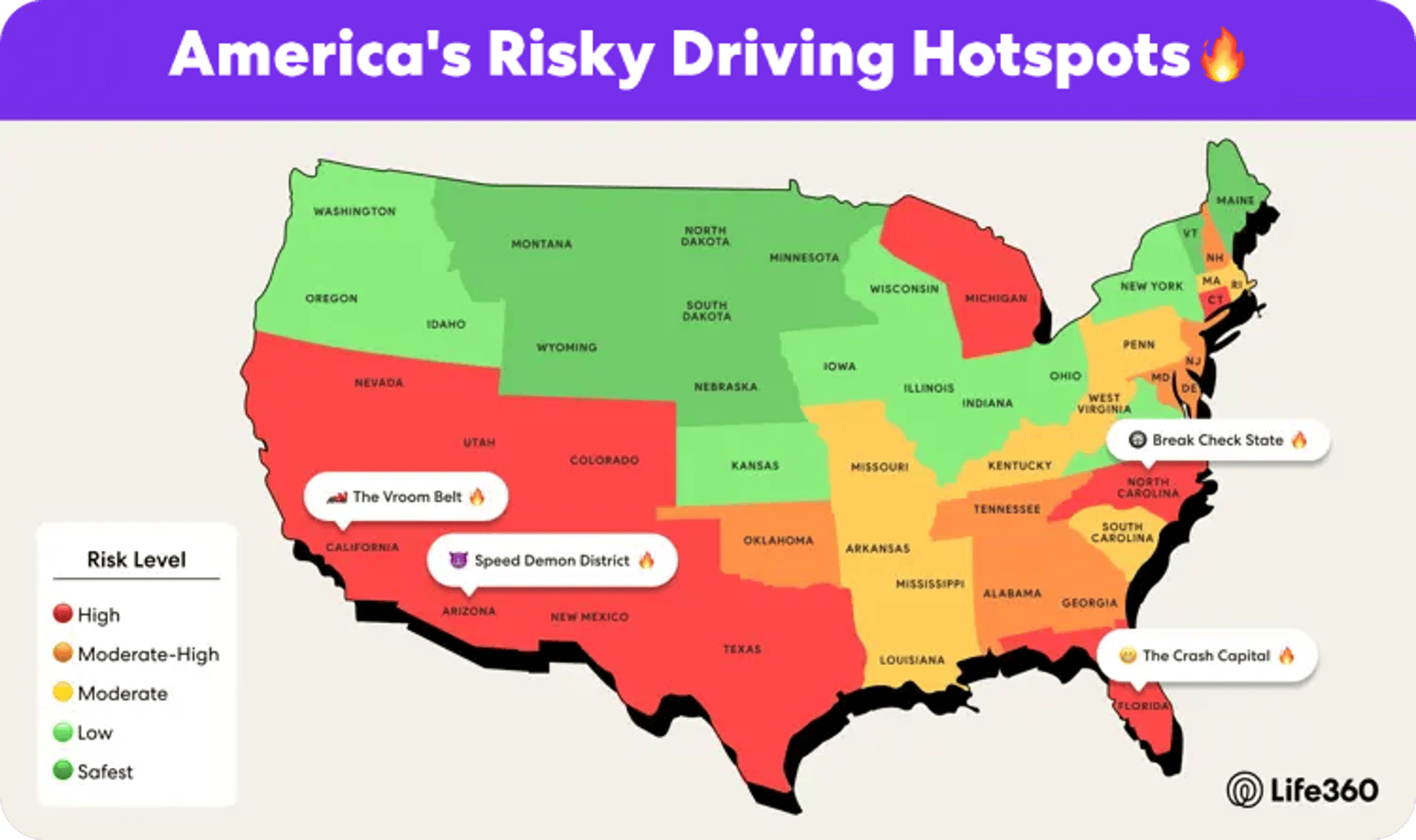
Life360’s internal driving data reveals where aggressive and risky behaviors are happening most often—specifically tracking four key indicators: crashes, speeding, hard braking and rapid acceleration.
The patterns are clear: the South and West consistently emerge as hotspots for dangerous driving behaviors.
Additionally, high-risk driving behaviors tend to cluster in densely populated metro areas and along high-speed corridors, where congestion, running late and road design can all contribute to more unsafe driving conditions. In these environments, drivers are more likely to encounter sudden stops, sharp acceleration and unpredictable maneuvers.
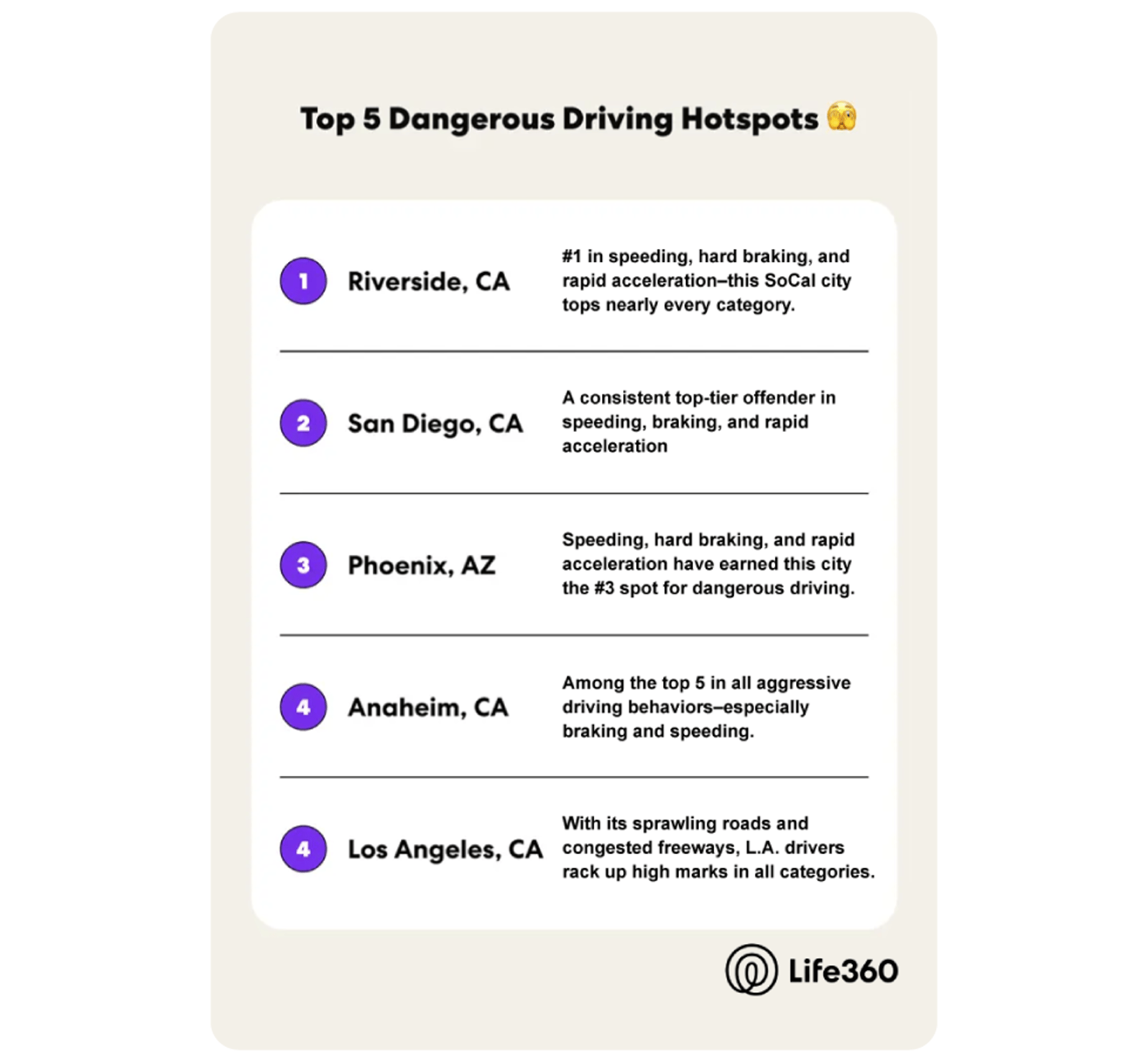
But, this isn’t just a regional issue—it’s a widespread behavioral one.
According to Consumer Affairs, the vast majority of U.S. drivers admit to engaging in at least one form of aggressive driving—such as speeding, tailgating or rapid lane changes—within the past year. Researchers also distinguish between aggressive driving and road rage, which involves more extreme behaviors like confrontation or threats. While less common, these incidents highlight how quickly everyday driving risks can escalate.
According to the latest data from the National Highway Traffic Safety Administration (NHTSA), western and southern states made up the top ten states with the most road rage.
In other words, risky driving isn’t limited to one place—it’s shaped by the conditions drivers face and the choices they make behind the wheel.
Who’s behind the wheel
Finally, risk shaped by who’s driving.
- Rapid acceleration peaks at age 18, according to Life360 data.
- Crash rates are highest among 17 to 20-year-olds.
- Gen Z drivers (ages 15–28) speed 84% more often than Baby Boomers, with both speeding and rapid acceleration peaking around age 20.